


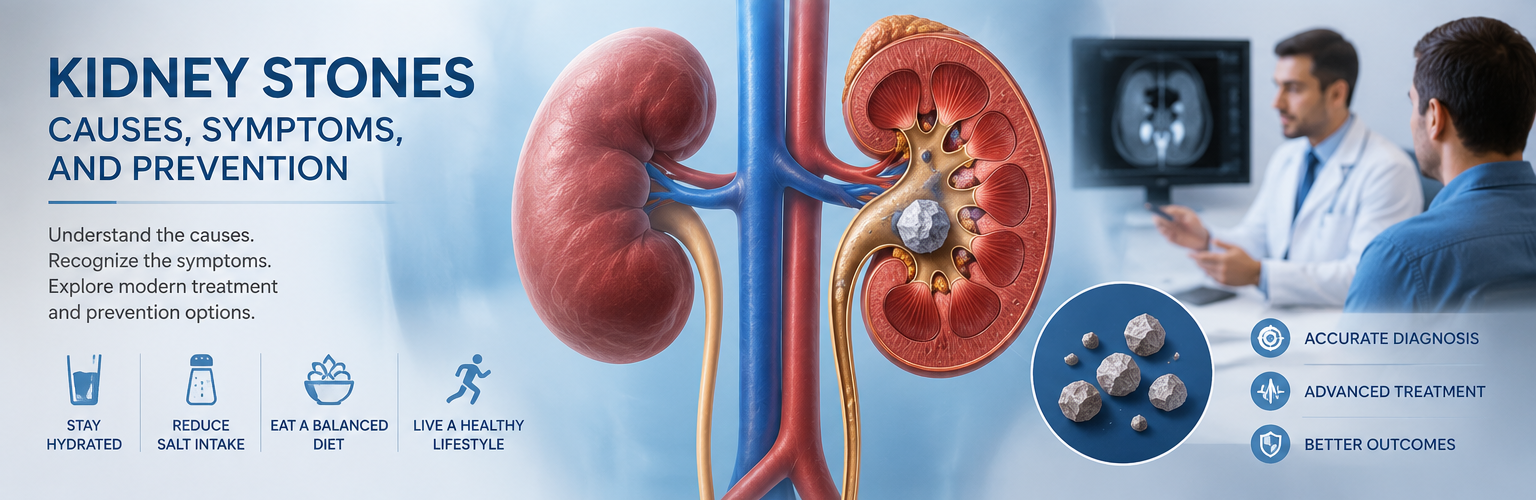
Kidney Stones: Causes, Symptoms, and Prevention
Kidney stones are one of the most common urological conditions, affecting millions of people worldwide. While some stones pass naturally, others may require medical treatment.
What Are Kidney Stones?
Kidney stones are hard deposits made of minerals and salts that form inside the kidneys. They can vary in size from tiny crystals to larger stones that block the urinary tract.
Common Symptoms
- Severe pain in the back, side, or lower abdomen
- Pain during urination
- Blood in the urine
- Frequent urge to urinate
- Nausea and vomiting
- Cloudy or foul-smelling urine
What Causes Kidney Stones?
Several factors increase the risk of developing kidney stones, including:
- Inadequate water intake
- High salt consumption
- Diets rich in animal protein
- Obesity
- Family history of kidney stones
- Certain medical conditions
How Can You Prevent Kidney Stones?
Stay Hydrated
Drinking plenty of water throughout the day is one of the most effective ways to reduce stone formation.
Reduce Salt Intake
Excess sodium increases calcium levels in the urine, which may contribute to stone formation.
Maintain a Balanced Diet
Include fruits, vegetables, and adequate calcium while limiting excessive animal protein and sugary beverages.
Follow Medical Advice
Patients with recurrent stones may benefit from specialized testing and personalized prevention plans.
Modern Treatment Options
Depending on the size and location of the stone, treatment may include:
- Medication
- Shockwave Lithotripsy (ESWL)
- Ureteroscopy with laser treatment
- Minimally invasive surgical procedures
Expert Care for Kidney Stones
At Kuwait German Urology Clinic, we offer advanced diagnostic and treatment options for kidney stone disease, helping patients achieve fast relief and long-term prevention.

